
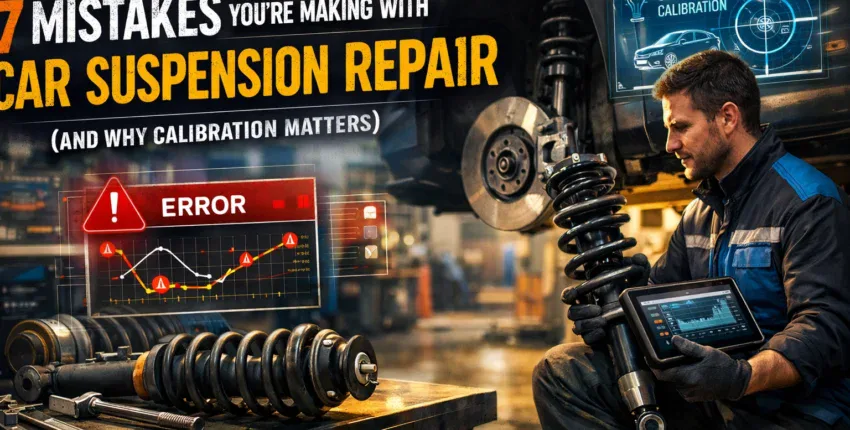
Let’s be honest: most of us don’t think about our car’s suspension until we hit a pothole on Jefferson Avenue that feels like it’s about to swallow our entire front axle. We treat the suspension like that one quiet friend who always helps you move: you take them for granted until they suddenly stop showing up.
But here’s the reality: your suspension isn’t just about making sure you don’t spill your coffee while driving through Newport News. It’s a complex network of springs, shocks, struts, and linkages that keep your tires on the road and your car under control. When things go wrong, it’s not just uncomfortable; it’s dangerous.
At Newmarket Automotive, our ASE-certified team sees a lot of “oops” moments when it comes to suspension care. To save your wallet and your sanity, we’ve rounded up the seven biggest mistakes people make with car suspension repair: and one high-tech step you absolutely cannot skip.
1. The “I’ll Do It Later” Alignment Strategy
We’ve all been there. You hit a curb, and now the steering wheel is tilted slightly to the left while you’re driving straight. You tell yourself, “It’s fine, I’ll get it fixed when I get new tires.”
The Mistake: Delaying a wheel alignment is like wearing one high heel and one sneaker: eventually, your knees and back are going to pay the price. Misaligned wheels cause uneven tire wear at an alarming rate. More importantly, they put massive strain on your ball joints, wheel bearings, and control arms.
The Honest Truth: Putting off a $100 alignment today could easily turn into a $1,200 car suspension repair bill next season. If your car is pulling to one side, come see us for auto repair in Newport News, VA before the damage cascades.
2. Treating Tire Pressure Like a Suggestion
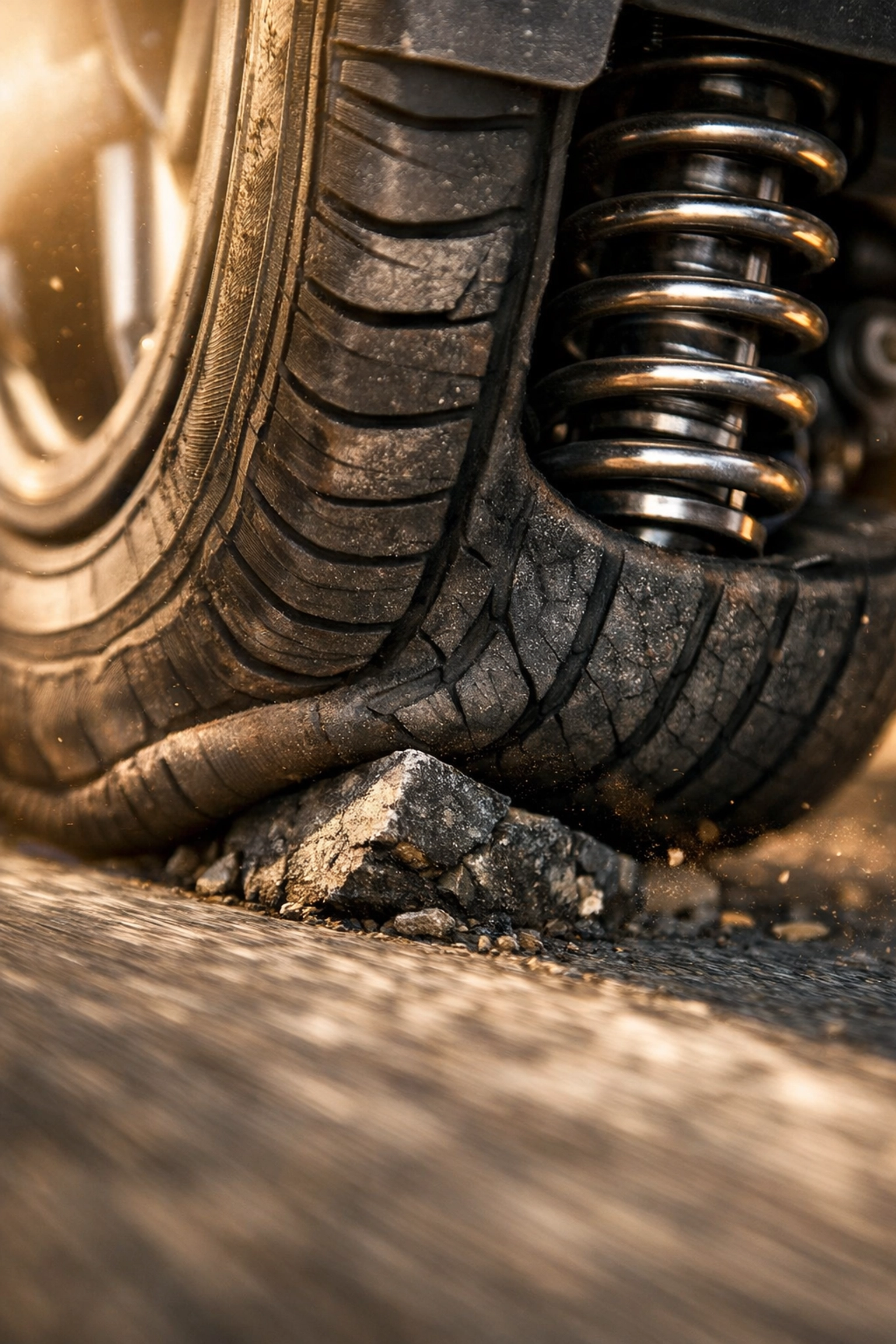
Your tires are the first line of defense for your suspension. Think of them as the “shoes” of your car. If the shoes don’t have enough cushion, your “joints” (the suspension) take the hit.
The Mistake: Driving on under-inflated tires. Research shows that under-inflated tires can increase impact force by up to 35%. That extra shock isn’t just absorbed by the rubber; it’s slammed directly into your struts and shocks.
The Solution: Check your tire pressure once a month. It takes two minutes and costs nothing, but it preserves the life of your expensive suspension components.
3. The “Hulk” Approach to Fasteners
For the DIY crowd in Newport News, we love the enthusiasm. But when it comes to suspension bolts, more “oomph” is not always better.
The Mistake: Overtightening top nuts on struts. We’ve seen DIYers crank these down until they practically fuse. This can actually damage the strut mount or even crack the frame over time. Conversely, loose bolts are just as bad, leading to rattling and premature wear.
Why it matters: Fasteners should be torqued to specific manufacturer specs. During our full system tune-ups, we ensure every bolt is exactly where it needs to be: not too tight, not too loose, but “just right.”
4. Picking Fashion Over Function (Incorrect Tire Sizes)
We get it: those oversized off-road tires look cool. But your car’s suspension was engineered for a specific weight and diameter.
The Mistake: Installing tires that are too large or the wrong weight rating for your vehicle. This can reduce the lifespan of your shock absorbers by as much as 30%. It’s like asking a marathon runner to compete in heavy combat boots; they can do it, but their joints won’t last the season.
Pro Tip: If you’re looking to upgrade your look, talk to an expert first. We can help you find a setup that looks great without nuking your suspension longevity.
5. Treating Your Sedan Like a Dump Truck
We live in a town where people stay busy, which often means hauling gear, tools, or the entire soccer team’s equipment.
The Mistake: Consistently overloading your vehicle. Every car has a Gross Vehicle Weight Rating (GVWR). When you exceed it, your springs and shocks stay compressed. Over time, they lose their “memory” and fail to bounce back, leading to a saggy ride and bottoming out over every speed bump.
The Fix: If you’re hauling heavy loads frequently, you might need heavy-duty shocks or a different vehicle rating. Don’t wait until your rear bumper is scraping the asphalt to address it.
6. Ignoring the “Sweaty” Strut
Shocks and struts are hydraulic. They use oil to dampen the movement of your car.
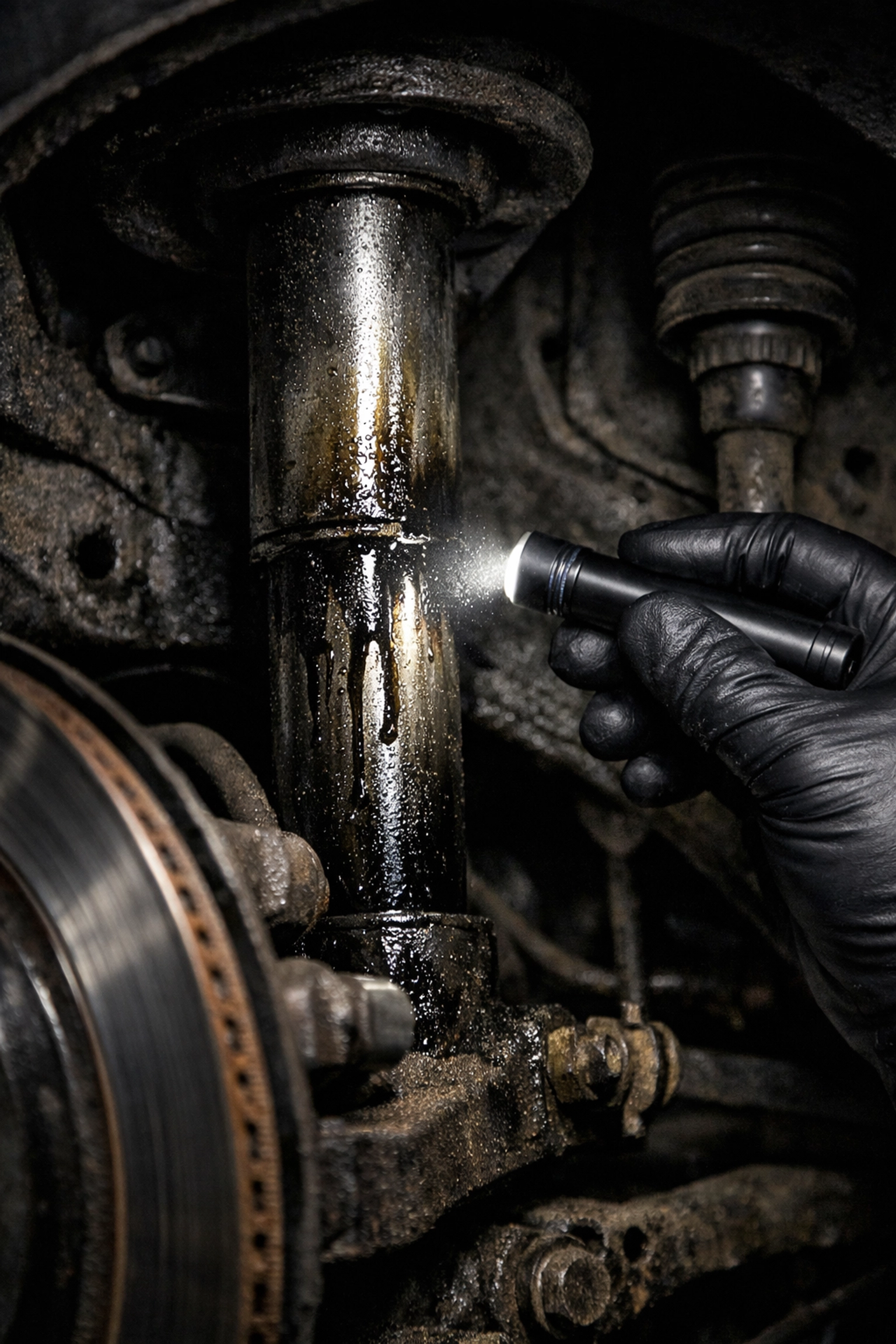
The Mistake: Noticing a bit of oil film on your struts and thinking, “It’s just a little leak.” If a shock is leaking, it’s already failing. A “sweaty” strut means the internal seals have given up, and the damper can no longer do its job of keeping your tires in contact with the road.
Visual Check: Take a peek behind your wheels. If you see greasy, dirt-caked moisture on the vertical tubes, it’s time to head to our Newport News workshop.
7. The “Old School” Trap: Skipping Calibration
This is the single biggest mistake modern car owners make. In the old days, you swapped a shock, did an alignment, and went on your way. In 2026, your car is basically a rolling computer.
The Mistake: Replacing suspension parts without calibrating the Advanced Driver Assistance Systems (ADAS).
Why Calibration is Non-Negotiable
Modern cars use cameras, radar, and sensors to power features like:
- Automatic Emergency Braking
- Lane Keep Assist
- Adaptive Cruise Control
These sensors are calibrated based on the car’s height and angle. If you replace a strut and the ride height changes by even half an inch, the “eyes” of your car are now looking at the wrong spot on the road. The car might think a shadow is a brick wall, or it might not see the car stopping in front of you.
At Newmarket Automotive, our ASE-certified technicians don’t just “bolt and go.” We ensure your vehicle’s electronic nervous system is synced up with its new mechanical parts. Without professional calibration, your safety features could become safety hazards.
The “Bounce Test”: A DIY Diagnostic
Want to know if you’re headed for a suspension repair? Try the “Expert Neighbor” test:
- Go to one corner of your car.
- Push down hard on the fender.
- Let go.
If the car bounces more than twice, your shocks are likely worn out. It should pop up and settle almost immediately. If it keeps dancing, your suspension is basically just a pogo stick at this point.
Seasonal Care: Pothole Season in Virginia
Newport News winters might not be the harshest in the world, but the freeze-thaw cycle wreaks havoc on our roads. Spring is “Pothole Season,” and it’s the most common time for suspension damage.
We recommend a quick inspection after the worst of the winter weather clears. Catching a torn dust boot or a slightly bent tie rod early can prevent a major breakdown on the way to Virginia Beach in the summer.

Trust the Experts at Newmarket Automotive
Suspension work can be intimidating, and the costs can vary wildly depending on whether you need a simple bushing replacement ($150-$300) or a full four-corner strut replacement ($1,000-$2,500+).
That’s why our brand tone is Honest. We won’t sell you a full suspension overhaul if you just need a new set of sway bar links. We’re here to be your consultants, empowering you to make the best decision for your safety and your budget.
Whether it’s solving a mysterious check engine light or a complex suspension calibration, our team is ready to keep you smooth on the road.
Don’t wait for the “clunk” to get louder. Contact us today or stop by our shop in Newport News, VA, and let’s make sure your ride is as safe as it is smooth.